Understanding Power Systems
 Iconic moments from human history - understanding systems through time
Power systems and their historical evolution form the foundation for understanding why Omxus takes the approach it does to governance, identity, and community organization.
Remember When: Iconic Moments from Human History
43 - 410 AD: Rome Takes Britain
Before Roman conquest, power was localized among Celtic tribes (Britons). Roman Britain (43 – c. 410 AD) became a province of the Roman Empire, governed by appointed officials, with centers in cities like Londinium (London). Anglo-Saxon Kingdoms (c. 410 – 1066): After Rome's withdrawal, Germanic settlers formed competing kingdoms (Wessex, Mercia, Northumbria) eventually unified under powerful kings (e.g., Alfred the Great).
We Are Still Plebs
For decades after every other reform, 92 hereditary peers still held seats in the UK's House of Lords. While many of us are burdened by debt and lack of rights inherited 2000 years ago, in 2026 we have a choice. We are the people and we get to choose.
Every group that did this before had the existence of a perception of "them". It really doesn't matter who "they" are. If a "them" exists...
There Is No Villain
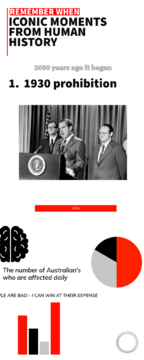 Understanding that crime is contextual
We destroy ourselves. Tell me one culture, one people, any tribe, who hasn't defined a "them". Stop looking for morals. Stop thinking people are bad. They're not. You're not. When you believe it. We can get started and fix this thing to be freakin' awesome. Together. As a weird extended idiosyncratic family. There's no villain in this story. We are all just people.
But now, we are people who have a choice. People who know better. People who can find out if we don't know. In the 11th century, the Lords thought they were doing what was best. Were they ill informed? I don't know. I wasn't there. I don't care either. Arguing over who was incorrect 2000 years ago sounds pretty inefficient to me. So what do we do?
We are human. We use our big fat brain to come up with a solution. Let me be clear on this: every culture or people or group or tribe who's gone before us made 1 mistake that becomes ridiculously obvious as soon as we switch on our brain.
Criminology teaches that crime is contextual and cannot exist without external influence. Actors learn the same thing from the other side: bad guys do not know they are bad. Nobody is the villain of their own story.
People Are Bad - I Can Win At Their Expense
This is the fundamental error in human thinking. The moment we divide into "us" and "them", we create the conditions for conflict, exploitation, and systemic harm.
The Omxus Alternative
 Systems thinking for better outcomes
Omxus rejects the premise that governance requires a ruling class. Instead:
- Proximity-weighted voting ensures decisions are made by those most affected
- Web of trust creates accountability without hierarchy
- Transparent systems prevent the concentration of power
- Universal participation replaces representative rule
From Plebs to Participants
The transition from "subjects" to "citizens" to "participants" represents a fundamental shift:
| Era |
Status |
Power Location |
Participation |
| Pre-modern |
Subject |
Lords/Kings |
None (obey) |
| Modern |
Citizen |
Representatives |
Vote occasionally |
| Omxus |
Participant |
Distributed |
Continuous engagement |
See Also